Quick Answer:
Bloat (gastric dilatation-volvulus/GDV) is a life-threatening emergency where the stomach fills with gas and may twist. Symptoms include unproductive retching, distended abdomen, restlessness, and drooling. SEEK IMMEDIATE VET CARE - this condition can kill within hours without treatment.
What Is Bloat/GDV in Dogs?
Bloat, known medically as gastric dilatation-volvulus (GDV), is one of the most dangerous emergencies in veterinary medicine. It occurs when a dog's stomach rapidly fills with gas, food, or fluid (gastric dilatation) and, in the most severe form, twists on its axis (volvulus). This condition can progress from first symptoms to death in as little as one to two hours, making it critical for every dog owner to recognize the warning signs.
There are two distinct phases of this condition that are important to understand:
Phase 1: Gastric Dilatation (Simple Bloat)
The stomach fills with gas and expands like a balloon. Blood flow may be partially compromised as the swollen stomach presses against surrounding blood vessels. Simple bloat can sometimes resolve on its own or with veterinary intervention (stomach tubing or trocar decompression), but it can also rapidly progress to the far more dangerous second phase.
Phase 2: Volvulus (Stomach Torsion)
The gas-filled stomach rotates 180 to 360 degrees, twisting at both ends. This traps gas and contents inside, cuts off blood supply to the stomach wall and spleen, compresses the vena cava (major vein returning blood to the heart), and causes cardiovascular shock. Without emergency surgery, GDV is always fatal.
When the stomach twists, it creates a cascade of life-threatening problems. The trapped gas continues to expand, the stomach wall begins to die from lack of blood flow (necrosis), toxins are released into the bloodstream, blood pressure drops as the heart struggles to pump effectively, and organs begin to fail. The spleen, which is attached to the stomach, often twists with it and may also lose its blood supply. This is why every second counts when GDV is suspected.
Symptoms of Bloat in Dogs
Recognizing the symptoms of bloat quickly is the single most important factor in your dog's survival. The signs often appear suddenly and progress rapidly. If your dog shows any combination of these symptoms, do not wait - get to an emergency veterinarian immediately.
Critical Warning Signs of Bloat
- Unproductive retching / dry heaving: The dog tries repeatedly to vomit but nothing (or very little) comes up. This is often the most recognizable and earliest sign.
- Swollen, distended abdomen: The belly appears visibly bloated, tight, or drum-like. Tapping on it may produce a hollow, tympanic sound.
- Restlessness and pacing: The dog cannot get comfortable, paces constantly, gets up and lies down repeatedly, and appears anxious or agitated.
- Excessive drooling: Hypersalivation often occurs because the dog feels nauseous but cannot vomit due to the twisted stomach.
- Rapid, shallow breathing: The expanded stomach pushes against the diaphragm, making it difficult for the dog to take deep breaths.
- Pale or white gums: Indicates poor blood circulation and impending cardiovascular shock. Gums may also feel cold or tacky to the touch.
- Collapse or inability to stand: A late-stage sign indicating severe shock. The dog may become unresponsive.
Additional signs you may notice include a hunched-up posture (the dog stands with an arched back as if in abdominal pain), looking or biting at the abdomen, a rapid and weak pulse, whining or signs of obvious distress, and failed attempts to defecate. Some owners describe their dog as acting "not right" or seeming suddenly uncomfortable after a meal - trust your instincts. If something seems wrong, especially in a breed predisposed to bloat, it is far better to make an unnecessary vet trip than to wait and lose precious time.
Bloat most commonly occurs in the evening, often two to three hours after eating a meal. Many owners have reported the onset happening between 6 PM and midnight. Being especially vigilant during this window can help you catch symptoms early. If your dog experiences unusual stomach gurgling along with these symptoms, it should raise additional concern.
Which Dogs Are Most at Risk?
While any dog can develop bloat, certain breeds are dramatically more susceptible. The primary physical risk factor is having a deep, narrow chest - a body type where the chest is significantly taller than it is wide. This conformation allows more room for the stomach to move and potentially rotate. Large and giant breeds are most commonly affected, but bloat has been reported in smaller breeds as well.
| Breed | Relative Risk Level | Lifetime Incidence |
|---|---|---|
| Great Dane | Highest risk | ~42% |
| Saint Bernard | Very high | ~22% |
| Weimaraner | Very high | ~19% |
| Irish Setter | High | ~14% |
| German Shepherd | High | ~12% |
| Standard Poodle | High | ~9% |
| Doberman Pinscher | Moderate-High | ~6% |
| Boxer | Moderate-High | ~5% |
| Basset Hound | Moderate | ~4% |
| Gordon Setter | Moderate | ~4% |
Beyond breed, individual risk factors include age (dogs over 7 are more susceptible), sex (males are slightly more at risk), having a first-degree relative who has had bloat, and a history of previous bloating episodes. Underweight dogs and dogs with a fearful or anxious temperament have also been shown to have a higher incidence. If you own a high-risk breed, discuss preventive measures with your veterinarian, including prophylactic gastropexy surgery.

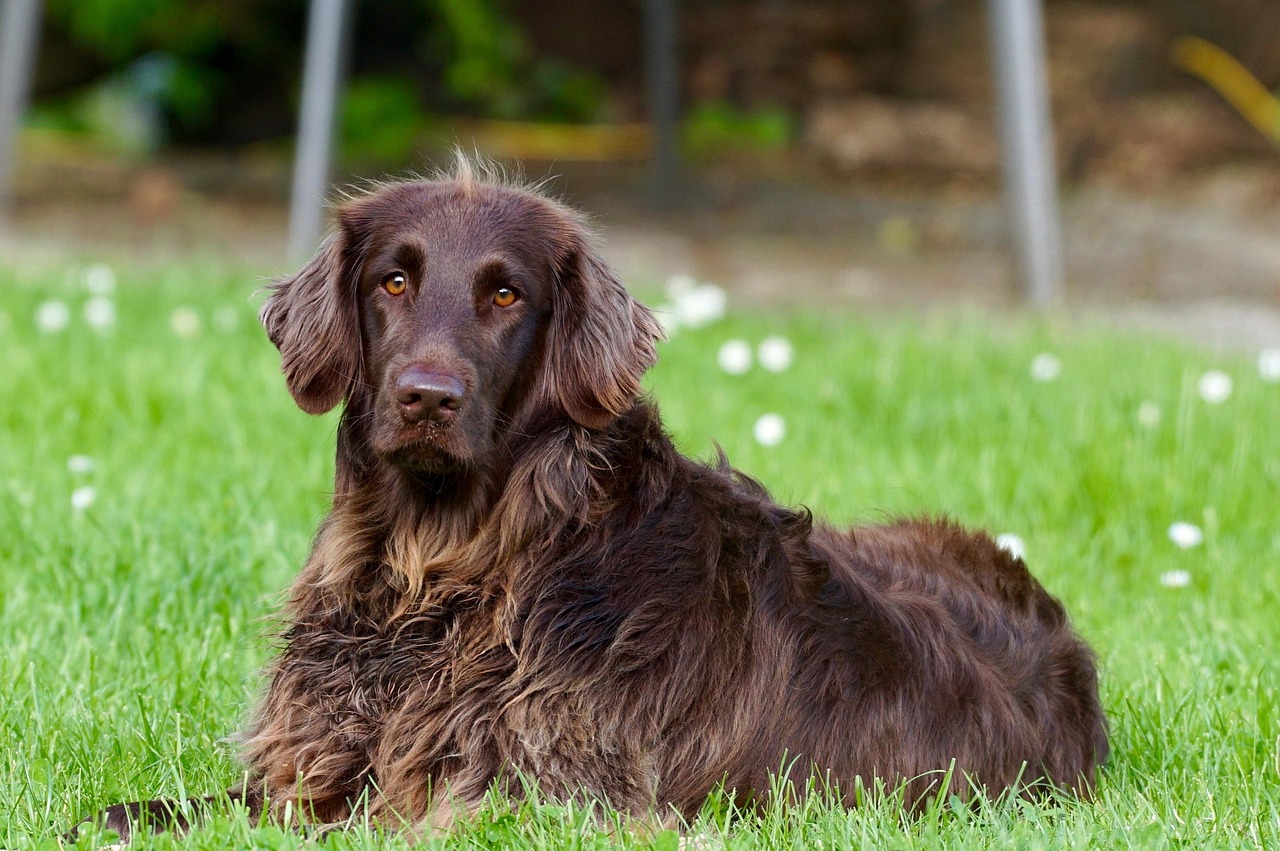
Regular grooming and vet visits allow professionals to monitor your dog's body condition and spot potential health risks
Causes and Risk Factors
Despite decades of research, the exact mechanism that triggers bloat is not fully understood. However, several risk factors have been identified through large-scale studies. Understanding these risk factors can help you take preventive action, especially if you own a high-risk breed.
1. Eating Too Fast
Dogs that gulp their food rapidly swallow large amounts of air along with their meals (aerophagia). This excess air in the stomach is believed to be a primary contributor to gastric dilatation. Speed eating is one of the most consistently identified risk factors in bloat research. Breeds that are prone to eating quickly, competitive eaters in multi-dog households, and dogs with food anxiety are all at increased risk.
2. One Large Meal Per Day
Feeding one large meal per day instead of two or three smaller meals significantly increases the risk of bloat. A single large meal causes greater stomach distension and produces more gas during digestion. Studies have shown that dogs fed once daily are approximately twice as likely to develop bloat compared to dogs fed two or more times per day. The volume of food in the stomach at any one time appears to be a key contributing factor.
3. Elevated Food Bowls (Controversial)
The role of elevated food bowls in bloat risk is one of the most debated topics in canine health. A landmark Purdue University study found that raised feeders actually increased the risk of bloat in large and giant breeds by approximately 110%, contradicting earlier recommendations to use them. However, some veterinarians still recommend them for dogs with megaesophagus or certain orthopedic conditions. For bloat prevention specifically, the current evidence suggests feeding from ground-level bowls is safer for at-risk breeds.
4. Exercise After Eating
Vigorous exercise, running, rough play, or any strenuous physical activity immediately before or after eating has long been associated with increased bloat risk. The theory is that physical activity with a full stomach may promote abnormal gastric motility and gas accumulation. Most veterinarians recommend waiting at least one hour after a meal before allowing exercise, and avoiding feeding immediately after vigorous activity as well. Some experts recommend waiting up to two hours for large and giant breeds.
5. Stress and Anxiety
Stress is a significant and often overlooked risk factor for bloat. Dogs with anxious or fearful temperaments have been shown to have a higher incidence of GDV. Stressful events that may trigger bloat include boarding or kenneling, travel, changes in routine, moving to a new home, the addition of a new pet or family member, thunderstorms or fireworks, and feeding time aggression in multi-dog households. Stress affects the nervous system that controls gut motility, potentially leading to abnormal stomach function.
6. Genetics and Family History
Genetics play a significant role in bloat susceptibility. Dogs with a first-degree relative (parent or sibling) that has experienced bloat are at substantially higher risk. Research suggests the heritability of bloat-prone traits includes chest depth-to-width ratio, gastric motility patterns, and ligament laxity that allows the stomach to move more freely in the abdomen. This is why responsible breeders of high-risk breeds track bloat history in their lines.
7. Age
The risk of bloat increases with age. For large breeds, the risk increases by approximately 20% for each year of age. For giant breeds, the risk increases by approximately 20% for each year after age 3. This is thought to be related to the weakening of the hepatogastric ligament that helps hold the stomach in place, as well as decreased gastric motility in older dogs. Senior dogs in high-risk breeds should be monitored especially closely.
Emergency Treatment
If you suspect your dog has bloat, do not attempt to treat it at home. Do not try to relieve the gas yourself, do not give over-the-counter medications, and do not wait to see if it gets better. Call your emergency veterinary clinic while you are on your way so they can prepare. Every minute matters with GDV.
Here is what happens when you arrive at the emergency veterinary hospital with a dog suspected of having bloat:
| Stage | Procedure | Timeframe |
|---|---|---|
| 1. Stabilization | IV fluids, pain management, blood pressure support, ECG monitoring for heart arrhythmias | First 15-30 minutes |
| 2. Decompression | Stomach tube (orogastric) passed to release gas, or trocar needle inserted through body wall to relieve pressure | Within first 30 minutes |
| 3. Diagnostic Imaging | Abdominal X-rays to confirm whether the stomach has twisted (characteristic "double bubble" or "shelf sign" on radiographs) | Within first 30-45 minutes |
| 4. Surgery (if GDV) | Untwist stomach, assess tissue viability, remove dead tissue or spleen if necessary, perform gastropexy | 1-3 hours |
| 5. Post-Op Monitoring | ICU monitoring for cardiac arrhythmias, DIC, reperfusion injury, and sepsis for 48-72 hours | 2-4 days hospitalization |
What Is Gastropexy?
Gastropexy is a surgical procedure where the stomach is permanently attached (tacked) to the abdominal body wall. This prevents the stomach from being able to rotate and twist in the future, which is the life-threatening component of GDV. During emergency GDV surgery, a gastropexy is always performed after the stomach is untwisted and assessed. Without gastropexy, the recurrence rate of GDV is approximately 80%.
It is important to understand that gastropexy does not prevent simple bloat (gas accumulation) - the stomach can still fill with gas. However, it prevents the deadly torsion that cuts off blood supply. Dogs that have had a gastropexy can still experience discomfort from gas distension and may still need veterinary attention, but the risk of the fatal twisting component is essentially eliminated.
The survival rate for GDV with surgery is approximately 80-85% when treatment is sought quickly. If stomach tissue has begun to die (necrosis) or the spleen must be removed, survival rates drop to 50-70%. Without surgery, GDV is fatal in virtually 100% of cases. This underscores why rapid recognition of symptoms and immediate veterinary care are so critical. If your dog also experiences gagging symptoms, it could be an early indicator of stomach distress that warrants attention.
Prevention Strategies
While bloat cannot be entirely prevented, there are several evidence-based strategies that can significantly reduce your dog's risk. If you own a high-risk breed, implementing all of these measures is strongly recommended.
Proven Prevention Strategies
- 1. Feed multiple small meals. Divide your dog's daily food into two or three meals instead of one large meal. This reduces the volume of food and gas in the stomach at any given time. For giant breeds, three meals per day is preferable.
- 2. Use a slow-feeder bowl. Slow-feeder bowls have ridges, mazes, or obstacles that force dogs to eat more slowly, reducing the amount of air swallowed during meals. Puzzle feeders and snuffle mats also work well. This is one of the simplest and most effective preventive measures.
- 3. Avoid exercise around mealtimes. Do not allow vigorous exercise for at least one hour before and after meals. For large and giant breeds, consider extending this to 90 minutes to two hours. Light walking is generally acceptable, but running, jumping, and rough play should wait.
- 4. Consider prophylactic gastropexy. For high-risk breeds, veterinarians increasingly recommend prophylactic gastropexy - performing the stomach-tacking procedure preventively, often at the same time as spay or neuter surgery. This is a routine laparoscopic procedure that typically adds 20-30 minutes to surgery time and can be the single most effective prevention against GDV.
- 5. Reduce mealtime stress. Feed dogs in a calm, quiet environment. In multi-dog households, feed dogs separately to prevent competitive eating and food guarding. Avoid feeding immediately after stressful events like car rides, vet visits, or boarding.
- 6. Feed from ground-level bowls. Based on current research, avoid raised food bowls for at-risk breeds unless specifically recommended by your veterinarian for another medical condition.
- 7. Avoid foods that produce excess gas. Some kibble formulations that list oils or fats in the first four ingredients have been associated with higher bloat risk in some studies. Soaking dry food in water before feeding may also help reduce gas production during digestion.
- 8. Maintain healthy body weight. Underweight dogs have a higher risk of bloat. Work with your vet and professional groomer to monitor your dog's body condition score and maintain optimal weight.
When to Rush to the Emergency Vet
With bloat, the golden rule is: when in doubt, go immediately. The cost of a false alarm is a vet bill and some lost time. The cost of waiting too long can be your dog's life. Here are the situations that demand immediate emergency veterinary care:
Rush to the Emergency Vet If:
- * Your dog is retching or dry heaving but nothing comes up
- * The abdomen is visibly swollen, hard, or distended
- * Your dog is pacing, restless, and cannot settle
- * Excessive drooling combined with obvious discomfort
- * Your dog stands with a hunched-back posture
- * Gums are pale, white, dark red, or blue-tinged
- * Rapid heart rate with a weak pulse
- * Your dog collapses or becomes too weak to stand
- * Any combination of the above in a large or giant breed dog
- * Your dog has a history of previous bloat episodes
Do not take time to call ahead unless someone else can drive while you call. Do not try home remedies, Gas-X (simethicone), or antacids - these will not help and you will lose valuable time. If your regular vet is closed, go directly to the nearest 24-hour emergency veterinary hospital. Know where this hospital is before you ever need it - having the address saved in your phone could save your dog's life.
While driving to the emergency vet, try to keep your dog as calm and still as possible. Do not let them drink water. If you can, have someone call the emergency hospital to let them know you are coming with a suspected bloat case so they can prepare.
Frequently Asked Questions
What are the first signs of bloat in a dog?▼
The earliest signs of bloat in dogs include unproductive retching or dry heaving (trying to vomit but nothing comes up), a visibly swollen or distended abdomen that may feel hard or tight, restlessness and pacing, excessive drooling, and signs of discomfort such as whining or looking at their belly. If you notice any of these signs, treat it as an emergency and get to a veterinarian immediately.
How quickly can bloat kill a dog?▼
Bloat can progress from first symptoms to death in as little as 1-2 hours if the stomach twists (GDV). Even without torsion, simple bloat can become life-threatening within hours as the distended stomach compresses blood vessels and organs. This is why bloat is considered the number one emergency in large-breed dogs. Immediate veterinary care is critical for survival.
What breeds are most at risk for bloat?▼
Large and giant breeds with deep, narrow chests are most at risk. Great Danes have the highest risk at 42% lifetime incidence. Other high-risk breeds include German Shepherds, Standard Poodles, Weimaraners, Saint Bernards, Irish Setters, Doberman Pinschers, Boxers, Basset Hounds, and Gordon Setters. However, any dog can develop bloat, including smaller breeds.
Can you prevent bloat in dogs?▼
While bloat cannot be completely prevented, you can significantly reduce the risk by feeding two or three smaller meals per day instead of one large meal, using a slow-feeder bowl, avoiding vigorous exercise for at least one hour before and after meals, reducing stress during feeding time, and considering prophylactic gastropexy surgery for high-risk breeds. Gastropexy does not prevent bloat but does prevent the life-threatening stomach torsion (GDV).
What is the difference between bloat and GDV in dogs?▼
Bloat (gastric dilatation) refers to the stomach filling with gas, food, or fluid and becoming distended. GDV (gastric dilatation-volvulus) occurs when the bloated stomach also rotates or twists on its axis, trapping the contents and cutting off blood supply. Simple bloat can sometimes resolve on its own or with veterinary decompression, but GDV always requires emergency surgery and is fatal without treatment.
How much does bloat surgery cost for a dog?▼
Emergency GDV surgery typically costs between $3,000 and $7,500 depending on your location, the severity of the condition, and whether complications like stomach tissue death (necrosis) or spleen removal are involved. Some emergency hospitals may charge more. Prophylactic gastropexy, a preventive surgery often done during spaying or neutering, typically costs $400-$1,500 and can prevent the deadly torsion component of GDV.
The Bottom Line
Dog bloat (GDV) is one of the most time-sensitive emergencies in veterinary medicine. It can strike suddenly, progress rapidly, and become fatal within hours without treatment. As a dog owner, especially if you have a large or giant breed, your knowledge of the warning signs and your willingness to act quickly are your dog's best chance of survival. Unproductive retching, a distended abdomen, restlessness, and excessive drooling should send you straight to the emergency vet - no exceptions, no waiting.
Prevention is equally important. Feeding multiple smaller meals, using slow-feeder bowls, avoiding exercise around mealtimes, and discussing prophylactic gastropexy with your vet are all proven strategies that can significantly reduce your dog's risk. For owners of Great Danes, German Shepherds, Standard Poodles, and other deep-chested breeds, these precautions should be considered essential, not optional.
Regular veterinary checkups and professional grooming appointments give you and your care team regular opportunities to monitor your dog's body condition, discuss breed-specific health risks, and ensure your prevention strategies are working. Being prepared before an emergency strikes is the most powerful thing you can do for your dog.
Related Health Articles
Dog Food Safety
Which human foods are safe, cautionary, or toxic for your dog.
Dog Grooming Guide
Find groomers by state, compare prices, and learn breed-specific care.
Mobile Grooming
Groomers who come to you — less stress for your dog during recovery.
🛍️ Recommended Products
Professional-grade pet care products, delivered to your door.
Browse Products →Related Symptom Guides
Keep Your Dog Healthy With Regular Grooming
Regular grooming visits help you stay on top of your dog's health, body condition, and overall wellbeing.
Find Groomers Near Me